Why Choose an Indoor Fountain?
Indoor water fountains are far more than mere decorative elements. The continuous movement of water introduces an auditory and visual dynamic that static decor cannot match. In busy homes and stressful office environments, the rhythmic sound of a babbling brook or cascading waterfall provides white noise that naturally masks distracting background sounds, such as traffic or loud appliances.
Additionally, circulating water acts as a natural humidifier. In winter months or in dry climates where central heating can dry out the indoor air, a water feature releases moisture via evaporation. This can be beneficial for houseplants, wooden furniture, and even respiratory comfort.
Popular Types of Indoor Fountains
Tabletop Fountains
Tabletop designs are the most accessible entry point into indoor water features. These compact, lightweight models are typically designed to sit on desks, end tables, or kitchen counters. Because of their size, they hold less water and utilize very small, low-wattage submersible pumps. They are ideal for meditation spaces, bedrooms, or small office cubicles.
Wall-Mounted Fountains
A wall-mounted fountain serves as living art. Typically constructed from materials like slate, mirrored glass, or copper, these fountains feature a wide basin at the bottom and a distribution rail at the top. Water clings to the backplate as it flows down, creating a shimmering visual effect with minimal splashing. Because they do not take up floor space, they are perfect for narrow hallways, entryways, and modern dining rooms. Proper stud-mounting is required due to the heavy weight of stone and water combined.
Freestanding Floor Fountains
For a striking architectural statement, freestanding floor fountains serve as natural room dividers. These tall structures (often 5 to 7 feet in height) command attention and provide a significant volume of flowing water. They are frequently utilized in corporate lobbies, spas, or large residential living spaces to define zones while adding a tranquil ambiance.
Material Considerations
The material of your indoor fountain dictates not just the aesthetic, but the maintenance requirements and the sound of the water flow.
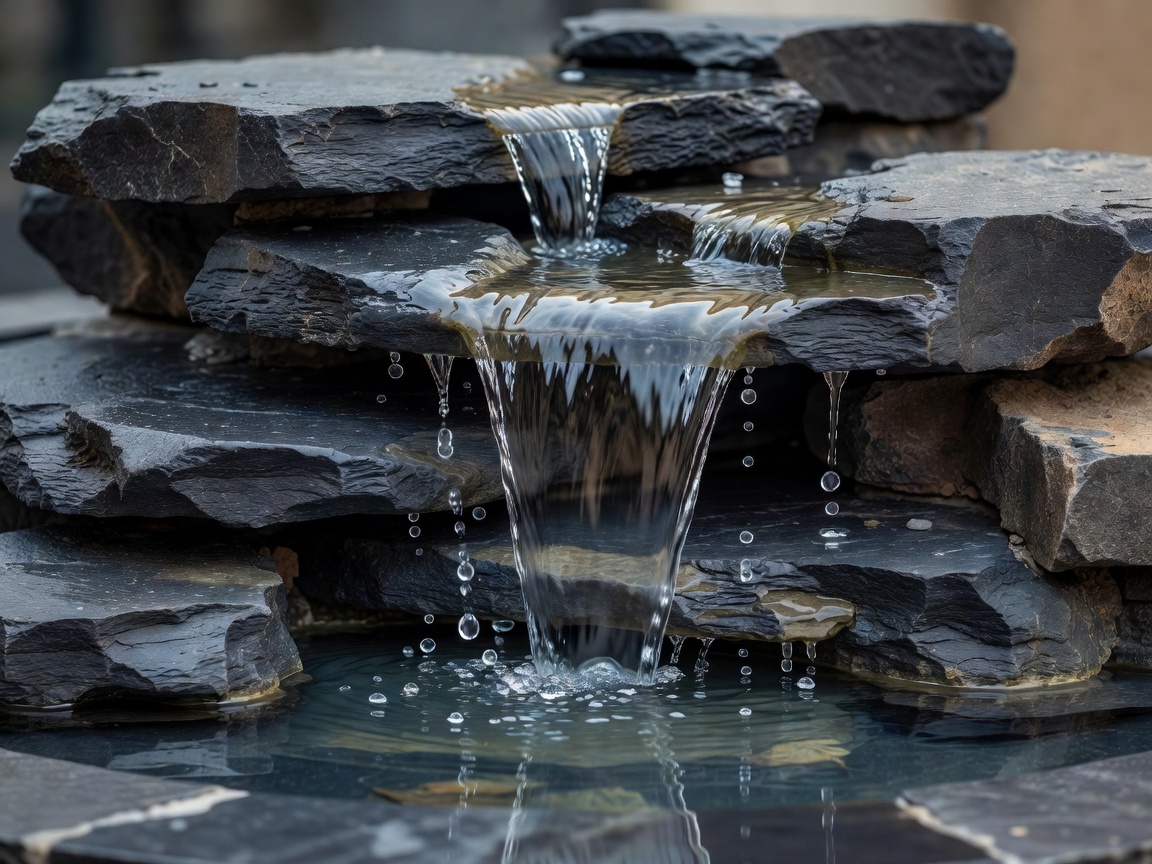
- Natural Stone & Slate: Offers a rugged, earthy appearance. The irregular surface creates a beautiful, rippling water effect and a distinct, rich sound. However, slate is heavy and prone to mineral buildup if hard water is used.
- Ceramic & Porcelain: Features smooth, glazed surfaces available in virtually any color. The sound is often a cleaner "plink" or splash. Ceramic is easy to wipe clean but can chip if handled roughly.
- Resin & Fiberglass: Highly versatile and lightweight. Resin can be molded to mimic heavy stone, wood logs, or metal without the associated weight. It is generally the most budget-friendly option.
- Glass & Mirror: Used primarily in wall or floor models. Water flowing over glass produces an almost silent, mesmerizing visual ripple. Mirrored surfaces can visually expand a small room.
Pros and Cons of Indoor Fountains
| Advantages | Considerations |
|---|---|
| Provides natural white noise for relaxation | Requires regular topping up due to evaporation |
| Acts as a gentle, natural air humidifier | Pumps can produce a slight humming noise |
| Self-contained; requires no permanent plumbing | Needs consistent cleaning to prevent algae and scale |
| Enhances aesthetic and interior design value | Proximity to electrical outlets is strictly required |
Setup and Maintenance Tips
When selecting a location for your indoor fountain, ensure it is placed on a level surface; uneven placement can cause water to flow off-center, leading to splashing outside the basin. Always keep the fountain away from easily damaged items like books, unprotected electronics, or antique wood furniture, just in case of a minor splash or leak.
To prolong the life of the pump and keep the water clear, it is highly recommended to use distilled water rather than tap water. Tap water contains minerals (like calcium and magnesium) that will eventually leave a stubborn white crust (scale) on the fountain surfaces and clog the internal workings of the pump. Routine maintenance involves checking the water level every few days—never let the pump run dry, as this will burn out the motor.